
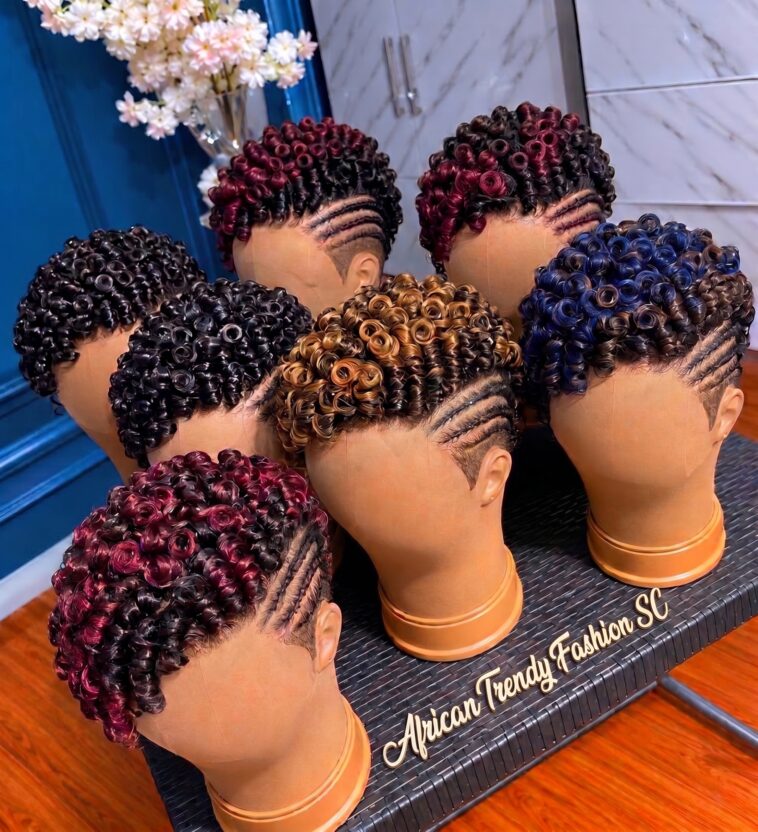
Five units in a row, back views, same carved lines and ringlet style in five different colors: black, burgundy, gold, navy, and a burgundy-black blend. Studio lighting, staged backdrop, all photographed at once. This is how color swatches should be presented — side by side so you can compare — and it is also where the biggest color-selection trap lives.
A swatch display under studio lighting is the most misleading version of what these colors will look like on you, because professional lighting adds warmth, increases saturation, and makes every shade look richer and glossier than it will in normal daylight or under the fluorescent lights of your bathroom.
Where To Buy A Wig Like This
If a maker offers the same style in multiple colors, they are trusting that you will make an informed choice about which tone suits your skin. That trust is only as good as the photos they give you to decide by, which is exactly why a swatch display under studio lighting is such a dangerous starting point.
Custom wig makers and lace studios are the main route. Search with color-specific vocabulary: “curly pixie wig color options,” “burgundy curly pixie wig,” “navy coil pixie human hair,” “color swatch pixie wigs.” A maker who offers multiple colors is good; a maker who shows swatches in multiple lighting contexts is better.
Instagram and TikTok wig specialists are the richest source. Look specifically for videos or photos showing the same color worn on real people with different skin tones, or photos of the same color in daylight versus studio lighting. A swatch under one light tells you almost nothing about what that color will look like under the lights in your life.
Etsy works for made-to-order pieces. Ask before ordering not just which color to choose, but for photos of that specific color in daylight, indoors, and if possible on a real head with skin tone close to yours.
Contact / Order Inquiries: WhatsApp is the standard channel for independent makers. [WhatsApp: +XX XXX XXX XX XX] — send this exact swatch photo as a reference and ask directly: “Can you send the [color] in daylight and indoor lighting, and if possible on a real person with skin tone similar to mine?” Studio photos are marketing; real-world photos are decision-making material.
How Much It Costs
The style itself costs the same regardless of color for standard hues (black, brown, burgundy), but premium colors cost more.
100% human hair, standard color (black, brown, burgundy): generally $200–$430
100% human hair, premium lifted color (honey blonde, copper, navy): typically $240–$500
100% human hair, rooted or multi-tone color: typically $260–$560
High-quality synthetic in standard colors: usually $60–$140
High-quality synthetic in lifted or premium colors: usually $80–$170
Basic synthetic curly pixie: often $20–$55
The arithmetic worth knowing: darker, richer colors (burgundy, black) cost less to produce than colors requiring lifting (navy, gold). A navy unit costs more than a black one because the base has to be lifted before the navy tone is applied. Gold costs the most because it requires the most lifting and the most careful toning to avoid brassiness.
Shipping, Delivery, And What To Expect After Ordering
Made-to-order timing. A color requiring special processing may take longer than a standard black unit. Expect two to four weeks for standard colors; add one to two weeks for lifted or multi-tone colors.
Once it arrives, the color may look different than the swatch photo under your home lighting. This is normal and expected. Give yourself a week of wearing and styling before deciding whether the color works, since your brain adjusts to new tones and the color will read differently once on your head versus sitting on a display bust.
International shipping is normal with Instagram, TikTok, and Etsy sellers, though delivery windows and customs fees vary by country. Ask about tracked shipping before you pay, especially on custom color orders where a delay could mean waiting longer for a remake.
Returns are usually limited on custom pieces, and even more limited on custom color. Get the policy in writing before you commit.
Cap fit is the most common regret. Send your head measurement and ask whether they build to it.
What A Swatch Display Actually Shows
Swatches under studio lighting do show which colors are in the maker’s palette, and they do show relative depth and warmth against each other. So burgundy reads warmer than black, navy reads cooler, and gold reads brighter. That relative information is real.
What studio lighting hides is how much saturation, warmth, and richness those colors will have under normal conditions. A burgundy that looks jewel-toned and deep under studio lights may read as a dull wine under your bathroom light. A navy that looks vivid in a studio may look almost black under fluorescent.
Choosing A Color For Your Skin
This is where the swatch display becomes actively misleading. Studio lighting is usually warm and flattering, which means every color in the swatch looks warm and glowing. But what actually matters is how a color reads against your skin tone under lights you live in.
A gold or copper tone that looks stunning against the warm light in this swatch may look brassy and sallow against your actual skin. A navy that reads as rich in a studio may wash you out under cold bathroom light. A burgundy that glows under professional lighting may look black and heavy once on your head in daylight.
Ask your maker for photos of the color you are considering in daylight specifically, and if possible on a real person with skin tone close to yours. That is the only swatch that actually tells you what to expect.
The Style Across All Five Units
The carved lines, the ringlet coils, the temple detail — all identical across the five colors. This is what a swatch display is for: proving that the style is consistent and the color is the only variable. If you love the carved line and coil shape, any of these five would give you the same carved line and coil shape; the question is which color suits your skin.
Before You Pay
Which color am I choosing, and why?
Can you send this specific color in daylight and indoor lighting?
Can you show this color on a real person with skin tone similar to mine?
Is this a standard color or does it require lifting, and how long will that take?
What happens if the color arrives too warm or too cool for my skin tone?
Wearing And Maintaining Color
Once you choose and receive your color, remember that color tone is relative. The color will look different under different light sources, and your brain will adjust to it within days. Give yourself at least a week of wearing before deciding whether it works, since home photos and mirror light often look different from how the piece feels when you are wearing it out.
Most lifted colors (anything requiring bleach processing) need maintenance. Sulfate-free products, cool rinses, and regular toning treatments keep the tone from fading or shifting toward brassy. Dark colors (black, burgundy) are the most forgiving; lifted colors (gold, navy, copper) need the most care.
Search Terms
curly pixie wig color options · burgundy curly pixie wig · navy coil pixie human hair · color swatch pixie wigs · curly pixie wig color matching · where to buy curly pixie wigs multiple colors
Final Thoughts
Study this swatch display for what it shows and hides. Five colors in a row under studio lighting is beautiful, but it is marketing material, not decision-making material. The color you commit to will look different in daylight, under your home lighting, and on your actual head with your actual skin tone.
Ask for real-world photos of your specific color choice before you order. Ask to see it on someone whose skin tone is close to yours. Then make your choice. Once it arrives, give yourself time to adjust — color perception is relative, and what looks unfamiliar on day one often looks perfect by day seven.
Decide honestly, then buy accordingly.